Admin
Admin 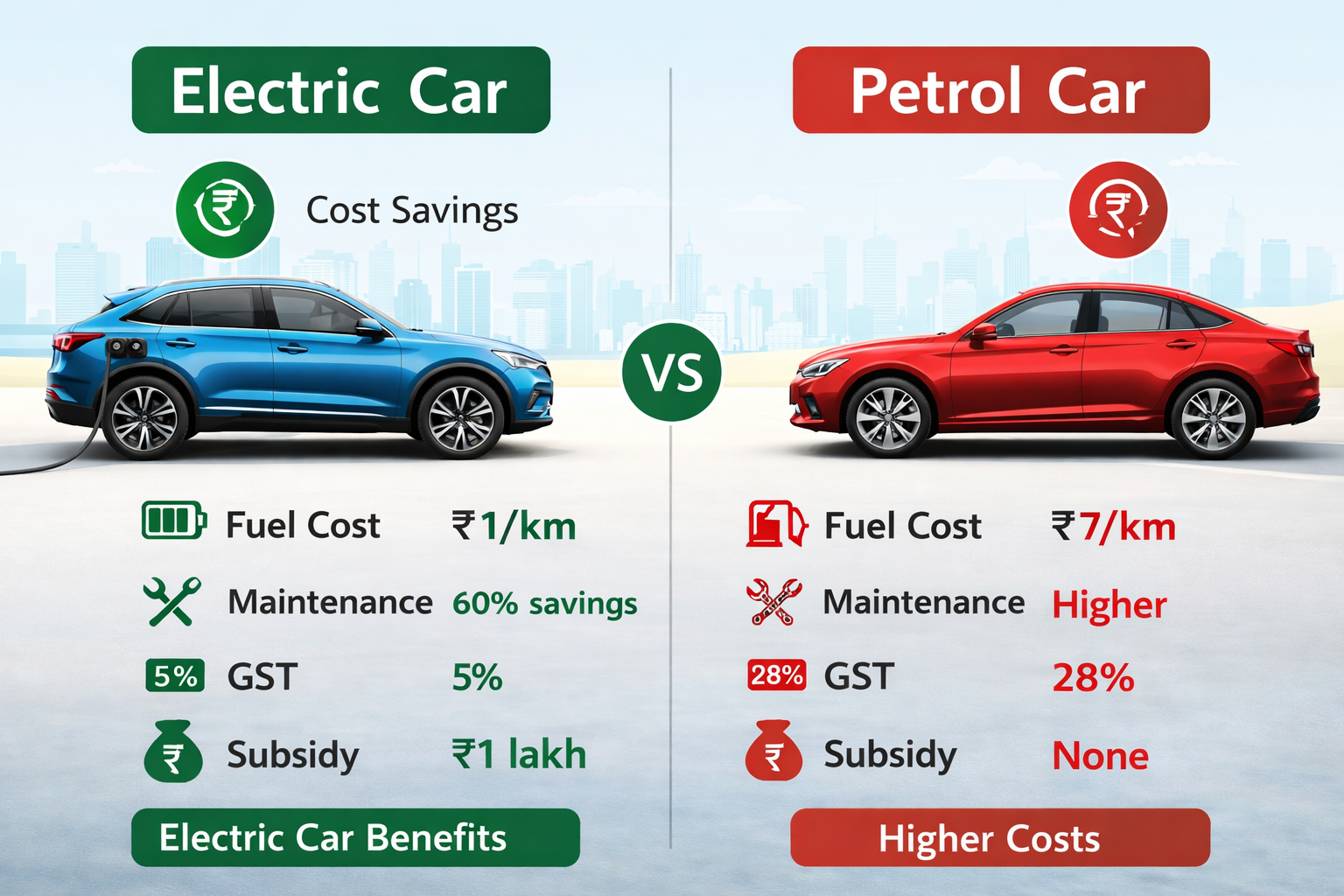
In 2026, the automotive industry in India is undergoing a significant change because electric vehicles (EVs) will be in the mainstream like never before. As petrol and diesel prices keep on the upward trend and more people become aware of the necessity to be environmentally friendly, EVs are seen as a viable alternative to consumers.
Nevertheless, a lot of customers remain reluctant because of the fear of affordability, charging systems, and the cost-effectiveness of the solution over the long term. This brings a very important question: Does it really make sense to purchase an electric car in India in 2026? The present press statement is a comprehensive guide to get you up-to-speed on the financial gains, infrastructural preparedness, and government incentives that are driving the EV market.
Total Cost of Ownership – More Than Just the Price Tag.
Initial Expenses vs. Future Economies.
Electric cars are also generally costly to buy in the initial stages as opposed to conventional petrol or diesel vehicles. This is largely because of the battery technology cost. Nevertheless, paying attention to the purchase price is not a cost of battery technology’s full picture.
In the long run, EVs are less costly, as they run at a much lower cost. Electricity is significantly cheaper than fuel, and the price per kilometer is brought down considerably. Also, EVs lack many parts that require mechanical functions, hence the reduced cost of maintenance. Engine oil changes, repairs of clutches, and complicated servicing of engines are not necessary.
The extra initial cost can be worthwhile in a few years to the users who drive frequently, particularly in cities.
Indian Charging Infrastructure: To what degree is it prepared?
Charging Networks Rapid development.
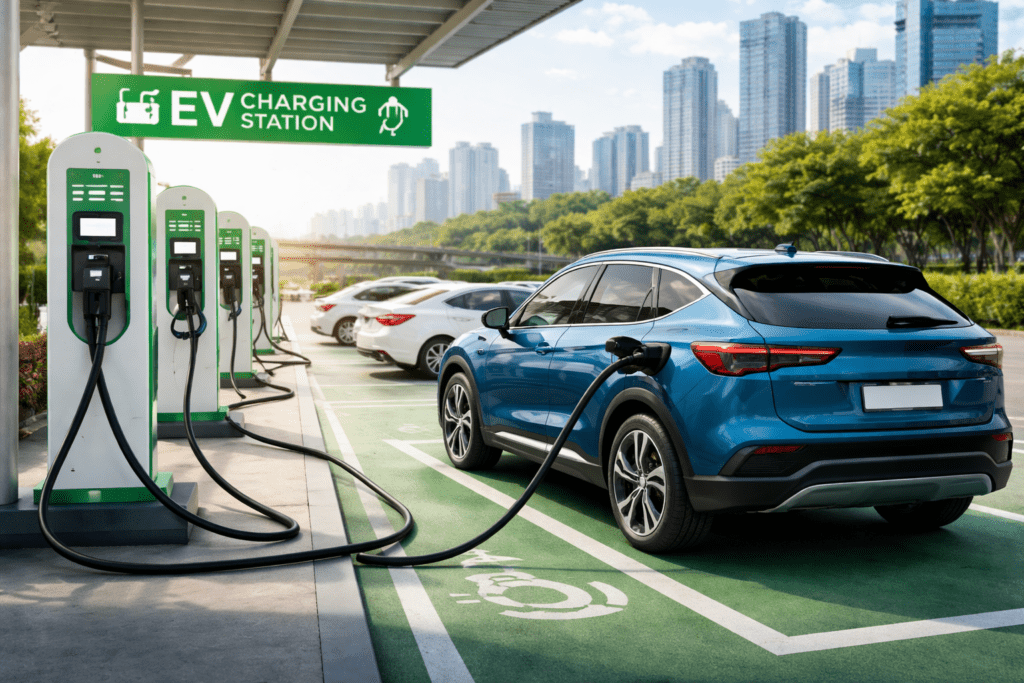
The EV infrastructure in India has become much better over the past years. Large cities like Delhi, Mumbai, Bangalore, and Hyderabad are witnessing an increased number of public charging stations. The highways are also being fitted with high-speed charging points to facilitate intercity transport.
This growth is being expedited by government efforts and investment by the private sector in the endeavor to make EV usage and uses more convenient and minimize range anxiety.
Home Charging as one of the Major Strengths.
The capability to charge a home electrically is one of the largest benefits of having such a car. The majority of the EV customers install a home charging station, which enables them to charge their car overnight at cheaper electricity rates.
This convenience saves the passenger the hassle of having to use the public at big charging facilities, and they can use it daily without much trouble.
Incentives and Subsidies of Government in 2026.
Strong Policy Support
In India, the government is still pro-evolution by offering several initiatives and subsidies. The policies are intended to lower the cost for the buyers and promote extensive adoption.
Tax Advantages and State-Level Incentives.
The GST rate on electric vehicles is lower at 5% and hence makes such vehicles cheap as opposed to conventional ones. Other benefits are given by many states, including exemption of road tax, waiving of registration fees, and direct purchase subsidies.
These incentives will reduce the total cost of ownership by a large margin and make EVs more affordable to a more significant number of people.
Performance, Power, and Usability.
Improved Driving Range
The current EVs in India have a driving range of 250 km to 500 km, which is charged on a single charge. This renders them good in both daily commuting and one-time long-distance travel.
Improved Driving Phenomenology.
Electric vehicles have instantaneous torque, acceleration, and a silent ride. These characteristics not only help to make EVs efficient but also fun to drive, particularly in urban settings.
Top Benefits of Purchasing an Electric Car in 2026.
- Reduced running expenses compared to petrol and diesel cars.
- Fewer moving parts that require minimal maintenance.
- Tax advantages at the expense of the purchase.
- Green alternative that has no tailpipe emissions.
- Home charging that can be conveniently used on a daily basis.
What to Beef About Before Purchasing.
Charging Time
EVs take a longer time to charge in comparison to petrol cars. Although there are fast chargers, they are slow even compared with refueling.
Infrastructure Inequities in Smaller Localities.
Even though cities have good equipment, rural centers and smaller towns might have problems with access to charging stations.
Higher Initial Cost
Although subsidized, EVs may still be more expensive initially, which will not appeal to all buyers.
Who Should Buy an EV in 2026?
EVs are the perfect choice of those who mostly drive in urban areas and have the option of charging their vehicle at home. They are particularly helpful among the daily commuters, who would save on the fuel costs as well as make the environment a little cleaner.
Nevertheless, the consumers who travel regularly over long distances in the far-off places might have to take the issue of charging availability into full account prior to making the choice.
Conclusion.
Individually, in 2026, purchasing an e-car in India will be a smart and futuristic choice for many consumers. Lower running costs, better battery performance, and the powerful governmental support make EVs a viable solution, particularly to city users.
Although the other challenges of charge time and availability of infrastructure in rural areas still exist, they are slowly being resolved by continuous investments and policy-based assistance. To the majority of urban drivers, the advantages of EV ownership definitely outweigh the disadvantages.
Altogether, in case you want to ensure a cheap, eco-friendly, and technological vehicle, investing in an electric car in 2026 is a good option.
FAQs – Electric Cars in India (2026)
1. Are petrol cars cheaper than electric cars in India?
EVs are less expensive in the long run because of reduced fuel and maintenance expenses.
2. What is the cost of charging an EV?
It costs considerably less to charge an EV as compared to filling a gasoline-powered car, as much as 70%.
3. Do the government subsidies survive to 2026?
The central and state governments still offer tax benefits and incentives, yes.
4. Is the infrastructure of charging common?
Infrastructure: Charging infrastructure is well developed in urban areas and developing in rural areas.
5. Are electric cars suitable for long drives?
Yes, but when making a longer journey, it is important to plan charging stops.