Admin
Admin 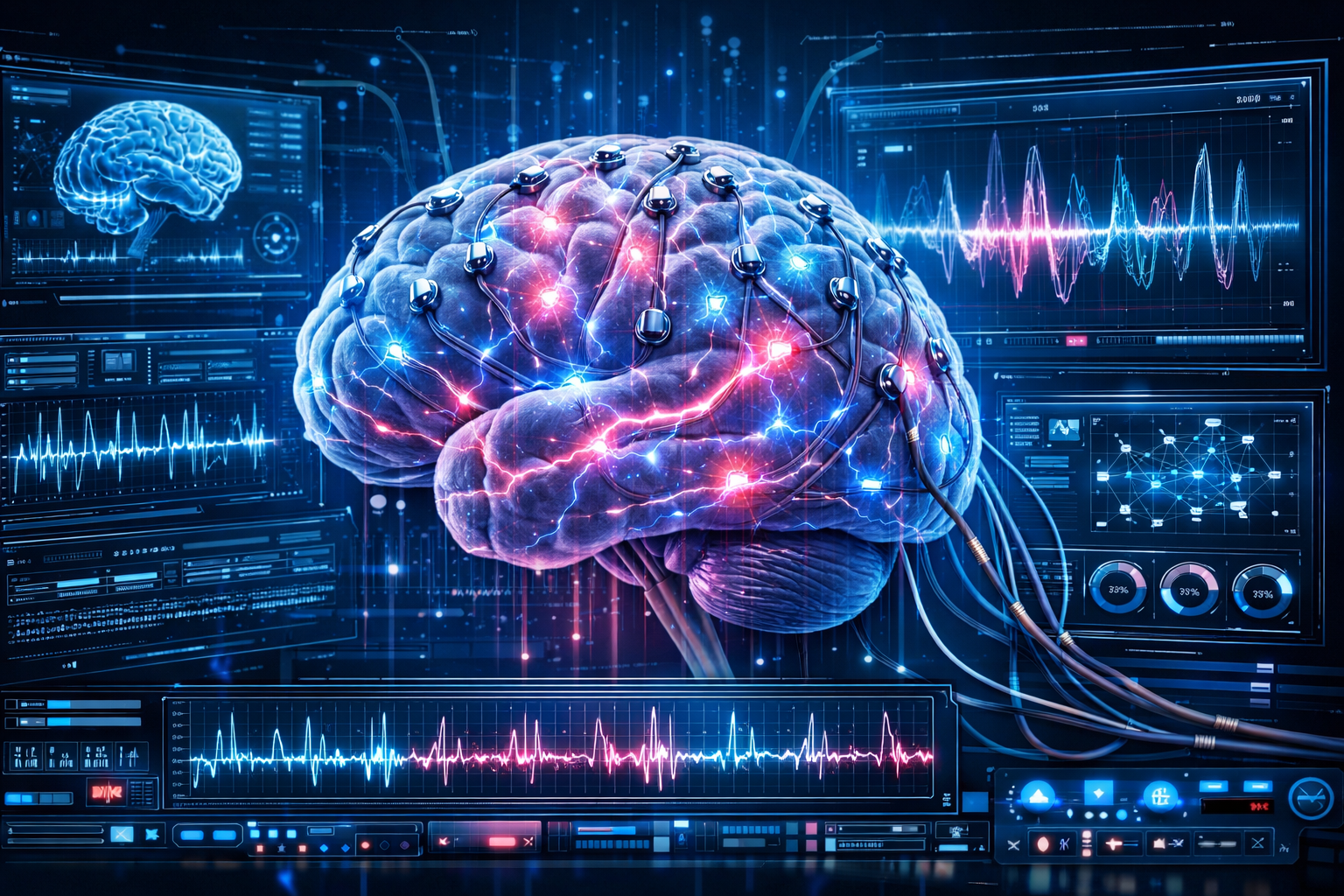
The interaction between the human brain and machines is changing with the introduction of Brain-Computer Interfaces (BCIs) that facilitate the direct communication between the brain and devices. BCIs can read neural activity and translate it into practical instructions as opposed to using physical inputs such as keyboards or touchscreens. It is a combination of Neuroscience, Artificial Intelligence, and engineering to develop systems with the potential to recreate lost capabilities, improve cognition, and reinvent human-machine interaction. Neuralink Company is among other companies that are striving hard to make this futuristic idea a reality.
Brain-Computer Interfaces What?
- Brain to machine communication line.
- Transduces neural impulses into digital signals.
- Removes the use of physical input devices.
- Records the activity of the brain using sensors or implants.
- Connects biology to state-of-the-art computing systems.
How BCIs Work
Brain-Computer Interfaces function based on a pipeline of multi-steps that start with signals of the brain and conclude with issuing commands on the machine. The electrical activity in the brain is detected by sensors and processed and filtered to eliminate noise. These signals are analyzed using advanced algorithms to determine meaningful patterns, which can be converted into commands that machines can comprehend. The system gets better with time as it gets to learn how people behave, which makes their interaction more precise and efficient.
Brain-Computer Interfaces Uses.
- Paralysis of patients: restoring movement.
- Providing communication to people with disabilities.
- Improvement of gaming and virtual experiences.
- Military and military support operations.
- Enhancing the learning and productivity systems.
Healthcare and Neurorehabilitation
BCIs are having a groundbreaking effect in the treatment of neurological diseases like Parkinson disease and Spinal Cord Injury. The computer systems are able to read a brain signal and translate it into movement enabling the patient to have a feeling of independence with the help of the prosthetic limbs. BCIs are also involved in rehabilitation programs to retrain the brain, with the help of adaptive learning mechanisms to recover lost motor functions.
Assistive Communication
BCIs provide an effective means of communication to people who are unable to speak or move. These systems have the ability to read the neural activity in writing or speech, enabling the user to communicate without the use of the body. This technology comes in particularly handy with patients such as ALS, where standard forms of communication are no longer possible.
Gaming and Entertainment
The gaming sector is also looking into BCIs so as to develop immersive experiences wherein players can have the ability to control characters in a game taking into consideration nothing but their thoughts. It may reshape the aspect of interaction over virtual space, and make the experiences intuitive and interactive.
Difficulties and Moral issues.
Technical Challenges
Even though the BCIs have been rapidly improving, there are a number of technical constraints. Invasive systems are likely to experience poor signal accuracy as a result of interference in non-invasive systems and complex surgical operations in invasive systems. The development costs are also very high and it is not scaled well making it slow to be adopted widely. Ongoing advancements in signal processing and hardware design are needed to break these walls.
Ethical Concerns
BCIs provoke the significant ethical issues of privacy and autonomy. As these systems are directly involved with brain data, they can be misused or accessed unlawfully. The issue of mind hacking and ownership of the data is becoming more topical with the further development of the technology.
Regulatory Landscape
Other institutions such as the Food and Drug Administration are making efforts to formulate standards on the safe use of BCIs. The regulatory systems should be able to strike a balance between innovation and safety, so that such devices should be effective and be ethically implemented.
Brain-Computer Interfaces Future.
Human Augmentation
BCIs can be used to improve human abilities more than the natural ones. This consists of better memory, enhanced learning and even enhanced sensory perception. With Neuroplasticity causing the brain to adapt, it is possible that the user will develop completely new methods of communicating with technology.
Brain-to-Brain Communication
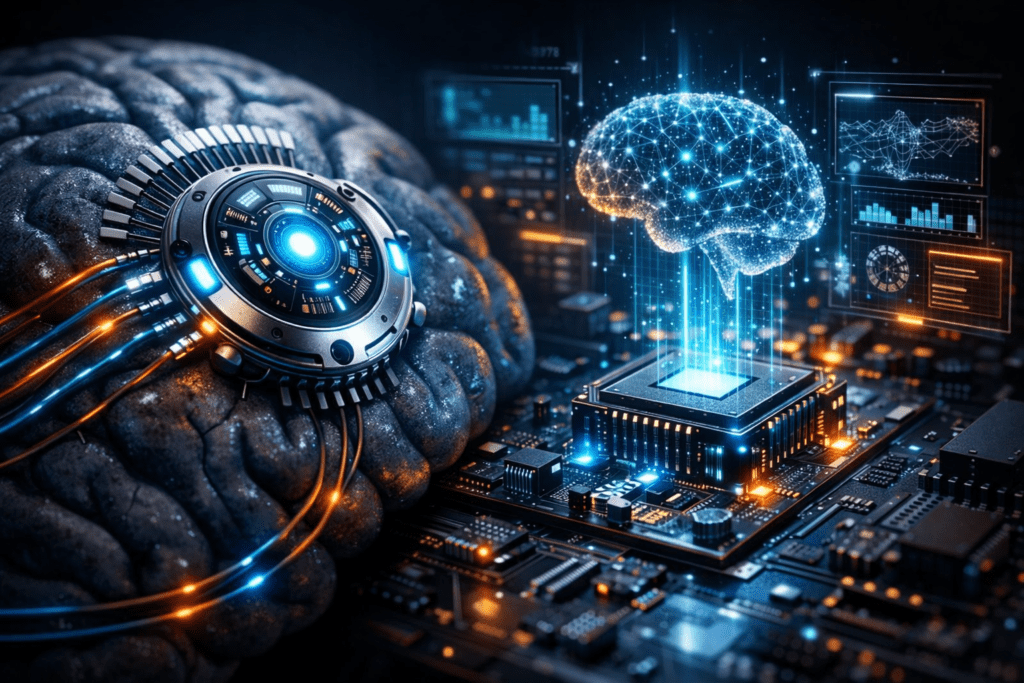
Human brains are being researched on the potential of communicating directly with each other. This may do away with language differences and allow immediate exchange of ideas, albeit at an early experimental stage.
AI Integration
By integrating BCIs and more sophisticated AI systems, it is possible to achieve real time decision-making assistance, where machines will support human decisions by making sense of complex information in real time via neural input.
Conclusion
Brain-Computer Interfaces are one of the most revolutionary innovations in contemporary technology. BCIs can revolutionize healthcare, communication and entertainment and other fields because they bridge the gap between the human brain and machines. Although there are still issues concerning ethics, privacy, and technical constraints, the research and continuing innovations are advancing the field. With this technology evolving, it can completely transform the concept of interacting with the digital world and create opportunities that were never before imagined.
Frequently Asked questions (FAQs)
1. What is a Brain-Computer Interface?
Brain-Computer Interface is a device that provides an interface between the brain and a computer or another device.
2. Are BCIs safe?
Non-invasive BCIs can be considered to be safe, whereas invasive ones carry a risk of surgery.
3. Do BCIs read minds?
They do not read thoughts but interpret brain signals associated to a particular action.
4. What are the applications of BCIs?
They find applications in medicine, communication, gaming and research.
5. What will become of BCIs?
BCIs can facilitate an improved level of cognition, improved healthcare solutions, and a smooth interaction between man and machine.